


Your game launches across forty territories at once. The gameplay is tight, the marketing beats landed, pre-orders look healthy. Then day one arrives: a progression-blocking crash locks PC players out of Act Two, and across the Steam reviews in German, Brazilian Portuguese and Japanese, players flag placeholder text, jokes that fall flat, and a settings menu with labels spilling off the screen.
6-minutes read
The build worked. The launch didn’t. Two very different failures, often mistaken for one problem, quietly decide how a global audience remembers the game.
Functional Quality Assurance (FQA) tests a game’s code, systems and performance to confirm it runs as designed, on every supported platform. Localisation Quality Assurance (LQA) tests a game’s translated content and adapted UI, in context, to confirm it reads and feels native in every target market. One question is “does it work?” The other is “does it work here, in this language, for this player?”
In video game QA testing, studios that blur the two disciplines make one of two costly mistakes: folding LQA into general functional testing and hoping a technical generalist catches a mistranslated menu the way they’d catch a collision bug (they won’t, that takes native linguistic judgement), or treating localisation as a translation task that ends once strings are delivered, with nobody checking how that text behaves inside the build.
Either shortcut surfaces at the worst moment: after launch, in reviews, in a language the internal team can’t read. It’s telling that industry bodies now build whole programmes around this exact split, the IGDA’s Localization Special Interest Group and the Globalization and Localization Association (GALA) both treat localisation QA as a discipline in its own right, not a subset of general testing.
Functional QA vs Linguistic QA isn’t jargon for its own sake, it’s two skill sets and two definitions of “done”. Get both right, as connected but distinct gates, and you protect what a global release depends on: player immersion, app store ratings, and international revenue.
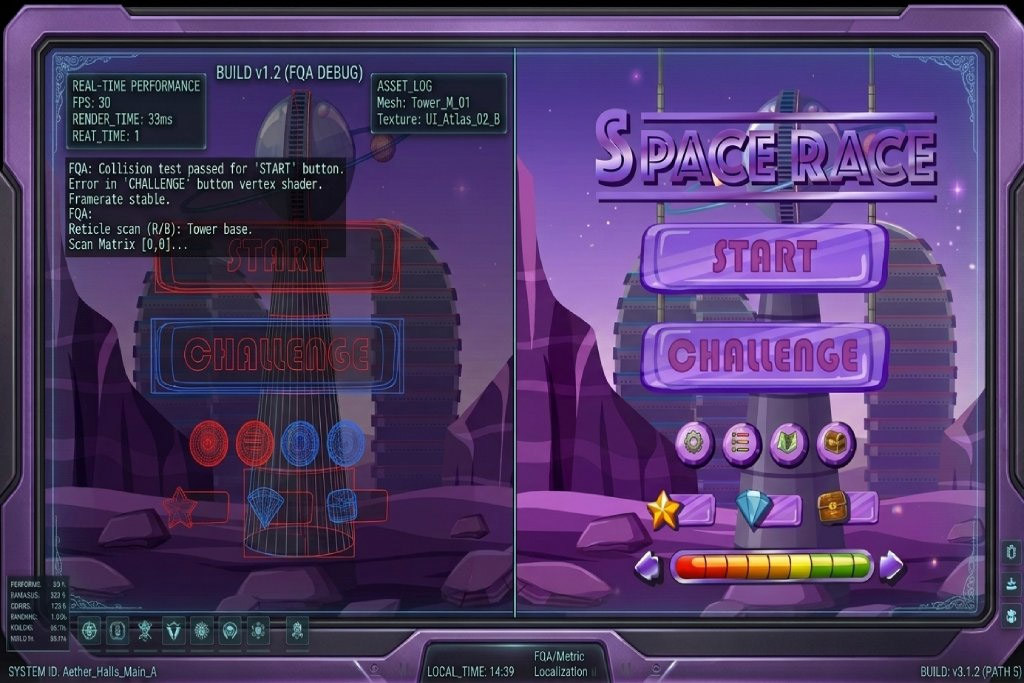
What is Functional Quality Assurance (FQA) in game development?
FQA is the guardian of a game’s mechanics, code stability and system performance. FQA testers live inside the build, triggering every quest path, stress-testing physics and collision, confirming the game runs consistently on a five-year-old laptop, a mid-range Android phone, or the newest console.
This is engineering verification, the technical foundation everything else, including localisation, is built on, and the discipline our Functional QA (FQA) teams are built around.

Key Focus Areas of FQA Testing
- Physics, collision detection and character mechanics: do movement, combat and interaction behave as intended in every scenario a player might attempt?
- Hardware and platform compatibility, PC configuration variance, console certification requirements (Sony, Microsoft and Nintendo each run their own technical checklists), and the sprawl of mobile OS versions and device specs.
- Exploratory, edge-case and destructive testing, deliberately trying to break the game in ways a scripted “happy path” test never would.
Typical FQA bugs found before launch
- Quest-progression blockers that trap players in an unwinnable state.
- Game-breaking crashes tied to specific hardware or save-file conditions.
- Framerate drops during performance-heavy scenes.
- Clipped geometry, collision failures and other rendering glitches.
What is Localisation Quality Assurance (LQA) in game development
If FQA is engineering verification, game localisation testing is cultural and linguistic verification. LQA guards everything that makes a translated build feel written for a market rather than converted into it: tone, humour, register, cultural sensitivity, and the physical fit of text inside a UI designed around a different language’s character count.
LQA happens inside the live build, not a spreadsheet; a translation can be perfect on paper and still fail LQA if it doesn’t fit its button. This is where our Localisation QA (LQA) testers work: native speakers who are also gamers, reviewing every line in context.
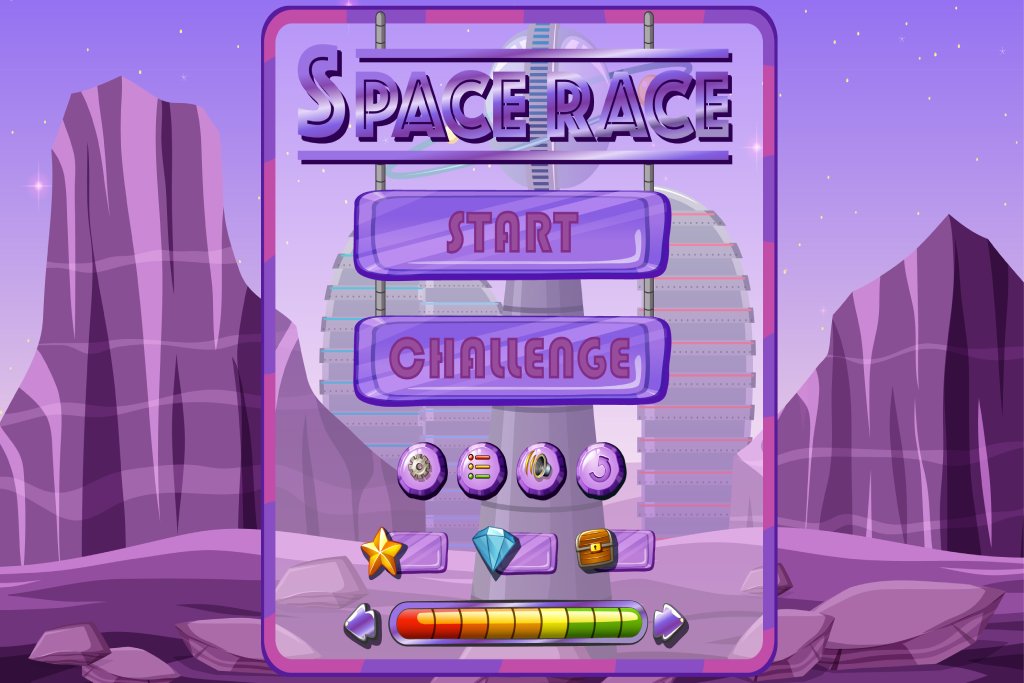
Key focus areas of LQA testing
- Linguistic accuracy in context, checking translated strings against what’s happening on screen, not just the word list they came from.
- Cultural adaptation, sensitivity checks, localised humour, region-specific content conventions and compliance.
- Formatting accuracy, character rendering, right-to-left or vertical text direction, font rendering issues, correct date, time and currency formats per locale.
Typical LQA bugs found in the wild
Left unchecked, these surface as UI display bugs that undercut everything the translation team got right:
- UI text overflow and text truncation, where a string is too long for its container.
- Untranslated strings or placeholder text surfacing mid-game: the infamous “string_NOT_FOUND”.
- Overly literal translations that are technically accurate but read as clumsy, breaking immersion at the wrong moment.
FQA vs. LQA: the core differences explained
What is the difference between FQA and LQA in video games, side by side?
| Feature | Functional QA (FQA) | Localisation QA (LQA) |
| Core Objective | Confirm the game works as designed | Confirm the game reads and feels native in-market |
| Primary Focus | Code, mechanics, performance, stability | Language, culture, UI text and formatting |
| Typical Testers | Technical QA engineers and platform specialists | Native-speaking linguists who are also gamers |
| Timing in Pipeline | Continuous, from early builds through certification | Once localised strings are integrated into a stable build |
| Key Deliverables | Bug reports on crashes, performance, platform compliance | Bug reports on mistranslation, truncation, cultural fit, formatting |
To integrate FQA and LQA for a global game release, sequence them: functional builds with FQA running continuously, string extraction and translation, build integration of localised text and audio, an LQA pass inside the live build, market by market, joint regression, where LQA fixes are re-checked by FQA for stability, certification, global launch.
We treat the two as connected stages of one programme, not separate vendor relationships: our combined LQA/FQA pass brings native linguists and technical testers into the same pipeline and the same build.
Why indie developers and publishers need both quality gates
The hidden costs of skipping LQA
LQA is often the gate cut first when budgets tighten. The costs show up publicly, and stay there:
- Negative reviews on Steam and mobile app stores calling out poor translation by name, unlike a patched bug, a bad early review rarely gets retracted.
- Erosion of trust in key markets, from EFIGS territories to LATAM and Asia-Pacific, where players are increasingly vocal about feeling like an afterthought.
The pitfalls of relying only on LQA
The reverse mistake is just as common among studios that treat localisation quality as the finish line. LQA testers are linguists, not engineers, they’ll flag every mistranslation in a settings menu, but can’t diagnose why that same menu freezes on a specific GPU driver. A beautifully localised UI means nothing if the player never gets past the main menu.
How FQA and LQA protect app store ratings and global revenue
Day-one sentiment sets the tone for a title’s lifecycle. Store algorithms and word of mouth respond disproportionately to early reviews, and both crashes and broken translations drive the same outcome: refunds, review-bombing, and acquisition costs that climb in the markets a publisher wants to grow.
Newzoo’s 2026 Global Games Market Report projects the global games market at $213.9 billion this year, with China and the US alone accounting for over half of consumer spending and Asia-Pacific close to half of global revenue. Most of a title’s addressable market sits outside its language of development, which is exactly what both gates protect.
The takeaway: two gates, one global player experience
FQA ensures your game works. LQA ensures your game connects. Neither substitutes for the other, one blurred QA pass is how studios end up with a technically flawless game that alienates half its market, or a beautifully localised game that crashes before players read a word of it.
Closing that gap is what our video game localisation and QA teams are built for: native-speaking, gaming-literate linguists paired with dedicated functional testers on one pipeline, plus lore transcreation and culturalisation, influencer marketing and community content, one partner across work usually split between five vendors.
Planning a multi-market launch and not certain your pipeline separates FQA from LQA? Talk to our game testing specialists about auditing it before your release date does it for you.