


Here is a number that tends to focus minds quickly: fixing a linguistic bug after your game has shipped can cost anywhere from 15 to 25 times more than catching it during pre-launch testing.
6-minutes read
Factor in platform re-certification fees from Sony or Microsoft, emergency translation sprints and the reputational fallout of a Reddit thread going viral for all the wrong reasons, and you are looking at a bill that could easily reach six figures before you have even read a single negative review.
What is LQA in video games? Localisation QA (LQA), or Linguistic Quality Assurance, is the systematic process of testing translated in-game content within the live game environment to verify linguistic accuracy, contextual appropriateness and technical correctness, including text display, UI fit and cultural compliance, before a title ships.
It is categorically different from standard video game translation, where a linguist works from a spreadsheet of extracted strings with no visibility of the actual game. In LQA, our linguists play the build, navigate every menu, trigger every cutscene and interact with every localised element exactly as a real player would.
3 Common Video Game Translation Mistakes to Avoid
Text Overflow and UI Breakages
This is one of the most persistent and most preventable technical failures in game localisation. Languages such as German and Russian are structurally expansive: a short English button label can swell by 30–40% once translated, and compound noun structures can completely break a UI designed solely around English string lengths.
Ausrüstungsverwaltung takes up rather more space than “Inventory”. Without a thorough LQA pass inside the live game, these breakages are invisible to any linguist working in isolation. Our team catches them before a single player does.
Lack of Context and Tone Inconsistencies
Context is not a luxury in video game localisation; it is a technical requirement. A string that reads “He’s gone” in isolation could refer to a character’s death, a comedic exit or a tactical retreat. Without proper context, a linguist simply cannot make an informed decision.
The result is tone fragmentation that breaks narrative immersion: the stoic warrior in your English build becomes oddly flippant in French, or eerily formal in Italian, through no fault of the translator, who was working blind.
Our linguists work with screenshots, character reference notes and approved glossaries as standard, because cultural adaptation and consistent characterisation depend on them.
Cultural Insensitivity and Compliance Issues
A game targeting global markets must navigate a complex web of regional regulations and deeply rooted cultural sensitivities. Symbols, hand gestures, colour associations and even specific numbers carry radically different meanings across territories.
Content that passes entirely without comment in a Western context can trigger outright bans in markets across the Middle East or East Asia. Germany’s restrictions on Nazi imagery, China’s prohibition on certain depictions of violence and skull motifs, and Thailand’s strict lèse-majesté laws have all caught studios by surprise.
Responsible localisation QA includes a cultural compliance review that maps every target market’s requirements before your gold master is signed off.
Famous Video Game Localisation Failures and What They Cost
The industry’s archive of video game localisation failures is, unfortunately, extensive and instructive.
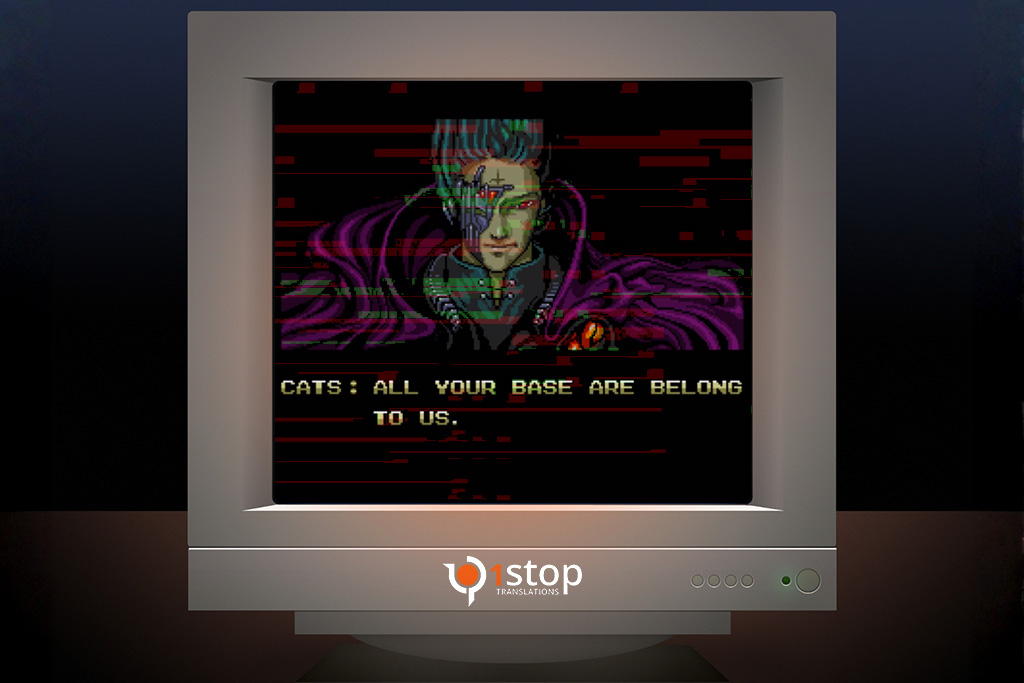
The most legendary example remains Zero Wing (Toaplan, 1989), whose European Mega Drive port gifted the world the immortal line “All your base are belong to us“, a catastrophic mistranslation produced without native-speaker oversight that became one of the internet’s earliest viral memes. Amusing in retrospect. Commercially and reputationally damaging at the time.
In Call of Duty: Modern Warfare 2, the Japanese version famously mistranslated the line “Remember, no Russian” (meaning “do not speak Russian”) as “Kill them, they are Russians”. The error confused players about the mission’s core premise and drew criticism for breaking immersion. The issue was later corrected in the remastered version.
Mario Party 8 shows that localisation can fail inside the same language. Game Developer reported that Nintendo UK recalled copies after an offensive term, harmless in some contexts but abusive in British English, appeared in the script. That meant retail disruption, replacement work and public embarrassment — all from one unchecked word.
Football Manager 2005 is a harder commercial lesson. China Daily reported that the game was banned in China after disputed territories were represented as separate countries. For global launches, that is the costliest LQA failure: lost market access.
Smaller indie titles face a starker version of the same problem. With localisation budgets already thin and LQA often the first line item cut, countless Steam releases have shipped with broken UI elements, inconsistent terminology and culturally tone-deaf content in their non-English builds.
That damage surfaces almost immediately in user reviews, and no patch cycle can fully repair it once an algorithm has registered the early negativity. Sadly, some of the best video game localisation examples in the indie space are remembered for what went wrong on launch day.
The pattern is consistent: skipped or under-resourced localisation QA creates problems that are expensive to fix, slow to recover from and entirely preventable.
How to Build a Game Localisation QA Checklist
If you are asking how to prepare a video game for localisation, start before the final sprint. The most useful checklist is practical, shared and owned by production. For small teams and indie developers, it also prevents a painful choice between shipping late and shipping a visibly weaker version.
These five steps represent the foundation of sound localisation QA best practices:
- Lock your strings before handover. Any changes to source text after the localisation process begins create version-control chaos and introduce untested content into your localised builds. Freeze the copy first.
- Provide context for every string. Screenshots, character descriptions, tone notes and maximum character counts should accompany your string files as standard. Ambiguity at this stage compounds into costly rework downstream.
- Build and share a style guide and glossary from day one. Consistent terminology is the backbone of immersive game localisation. Define your proper nouns, invented vocabulary and character voices before your linguists begin.
- Give your LQA team access to a playable build. Cheat codes, level skips and debug modes are essential working tools. A tester who cannot trigger the content cannot test it.
- Design your UI for text expansion from the outset. Plan for up to 40% more characters than your English strings require. Retrofitting UI for localisation after the fact is one of the most expensive corrections in game development, and one of the easiest to avoid.
Why In-Game Live Checks Are the Ultimate Safety Net
Out-of-context testing will always give you a partial picture. A linguist reviewing strings in a spreadsheet, however experienced, cannot see how a translated line reads when it appears over a burning cityscape at the climax of Act Three.
They cannot feel the tonal dissonance when a technically correct menu label looks bizarrely formal beside the gritty aesthetic of your game world. They cannot catch the tooltip that wraps unexpectedly on a console UI, or the dialogue line that fires without audio sync because the character count went unchecked.
Our In-Game Live Checks service is built on an entirely different philosophy. Our specialist linguists review every localised element inside the live game environment, across every platform your title targets: console, PC and mobile.
They play, explore, test edge cases and stress the UI. They surface not only linguistic errors but also UI breakages, cultural missteps and contextual inconsistencies that no automated pipeline would ever flag.
What sets this apart from any standard localisation QA offering is one critical distinction: our In-Game Linguistic Review service does not operate as a standalone service appended to the end of a generic workflow. It is a core, integrated component of our Red Pill Framework, 1Stop Translations’ proprietary methodology for what we define as evolution-grade localisation.
The Red Pill Framework unifies linguistic quality assurance, functional quality assurance, cultural adaptation and live in-build testing into a single modular system, calibrated to your studio’s exact pipeline rather than an off-the-shelf process.
It is human-centric by design, ISO-certified at every stage and built around a single conviction: localisation is a craft, not a commodity. This is what other video game localisation companies cannot replicate, because the framework, and the philosophy behind it, are ours.
This is the layer of quality assurance that separates a polished international release from an embarrassing post-launch patch cycle. When you are evaluating video game translation services and comparing video game localisation companies, the defining question is straightforward: do their linguists work inside your game or outside it?
Do not let a poor translation undo years of development. Contact our LQA experts and let’s talk about your global launch.