
Level Up: How 1Stop Translations Conquered the Global Video Game Localisation Market
The rules of global publishing have changed. A game launched today is not released in one country; it is born simultaneously into dozens of markets, each with its own cultural codes, linguistic nuances and player expectations.
6-minutes read
Code may be universal, but culture emphatically is not. Bridging that gap — from a game’s source strings to a player’s experience — is precisely where 1Stop Translations operates.
With two decades of expertise and an in-house network of more than 20,000 specialist linguists, we have become the video game localisation agency of choice for the full spectrum of the industry: from AAA publishers navigating complex, multi-platform launches to indie devs who need a creative partner that cares as deeply about their game’s identity as they do.
Beyond Translation: What Are Game Localisation and Cultural Adaptation?
Video game localisation is the bespoke process of adapting a game’s entire linguistic and cultural identity for a new market. Unlike simple translation, which moves text from one language to another, localisation encompasses UI restructuring, date and currency formatting, the modification of colour symbolism — red signals luck in China but danger in Western markets — and the re-engineering of humour so that a joke that lands in Los Angeles also lands in Lyon. This is what the industry calls cultural adaptation, and it is where the real craft lies.
Consider a character whose name is a pun in English. A direct translation is worthless; the meaning collapses. What is required is transcreation: the reconstruction of meaning and tone from the ground up in the target language.
When 1Stop Translations approaches a new project, our linguists are briefed not just on vocabulary, but on the game’s narrative architecture, character relationships and the emotional beats the developer intends to hit. We understand the subtext, not just the text.
This distinction matters enormously when comparing video game localisation companies. Agencies that treat games as documents to be translated produce work that players immediately sense as foreign. Our bespoke language services treat every game as a cultural artefact deserving of a custom-fit solution: one that makes a player in Warsaw or Osaka feel that the game was made for them.
Our Bespoke Video Game Localisation Process: Quality Without Compromise
What are the biggest challenges in game localisation? In our experience, they cluster around three pressure points: technical integration, creative fidelity and quality assurance at scale.
Our video game localisation process is designed to address all three simultaneously. It begins with a structured asset audit, cataloguing every string, UI element and embedded graphic that will require adaptation. From there, our Project Managers assign specialist linguists with direct experience in the relevant genre, whether that is sci-fi, platformer or RPG.
The linguistic phase integrates seamlessly with the client’s build pipeline. We work within leading localisation platforms and game engines, ensuring that translated strings fit their containers without truncation or overflow — a technical discipline that generic translation agencies routinely overlook.
Internally, every deliverable passes through our Linguistic Quality Assurance (LQA) protocol: an independent review layer that tests the content not only for grammatical accuracy but also for immersion. Does it feel like a native-language game, or does it feel translated?
This commitment to precision is what separates our video game localisation services from the competition. Quality is not just a promise; it is enforced through our ISO 9001, ISO 17100, and ISO 18587 certifications.
Case Study: Preserving Creative Identity in Big Hops
Released in January 2025 on Steam, Nintendo Switch, and PlayStation 5, Big Hops follows Hop, a friendly frog on an emotionally rich adventure across the Red Desert, the Open Ocean and the Shattered Mountain.
The game’s entire personality rests on warmth, wit and a cast of charming animal characters designed with genuine affection. For an indie title like this, voice is everything. Lose the humour and you lose the game.
1Stop Translations localised Big Hops into Spanish, Brazilian Portuguese, Chinese and Russian. Each of these markets carries distinct cultural attitudes towards anthropomorphic characters, childhood adventure narratives and comedic tone.
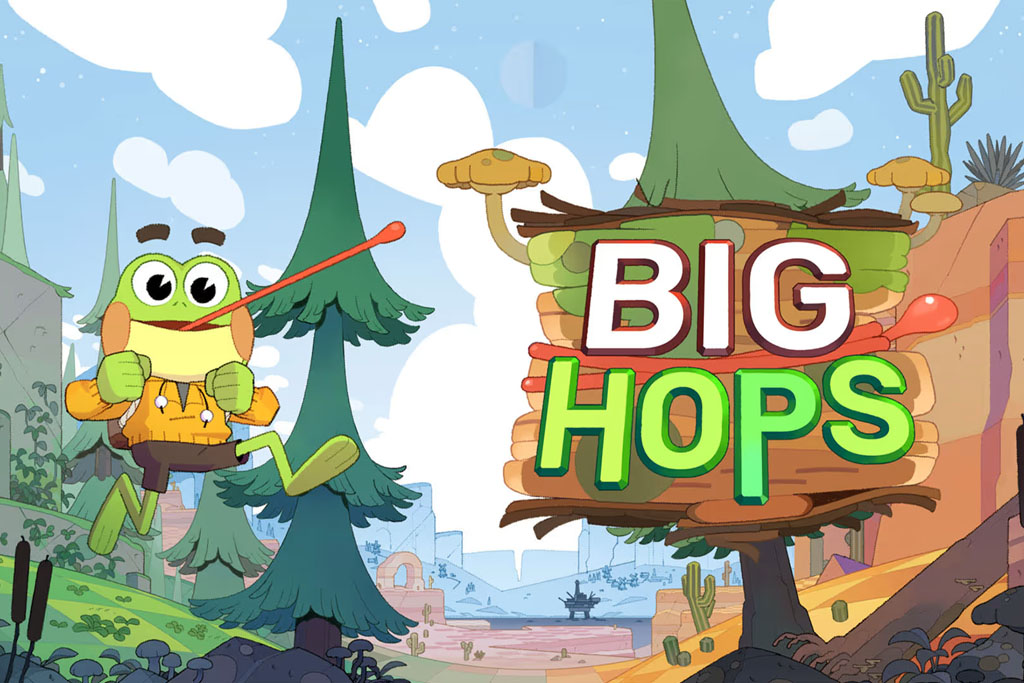
Our linguists became genuine creative partners, carefully transcreating puns and character-specific speech patterns so that Hop’s personality resonated with the same warmth in São Paulo as in the English original.
Why is cultural adaptation important in video games? Big Hops makes the answer tangible. Small games do not receive less care from our team. Every indie project is treated as a premium engagement, because a great game deserves to be experienced as its creators intended, in every language and by every player.
Case Study: Strategic Global Reach for Sliding Hero
Silent Chicken’s atmospheric puzzle-adventure Sliding Hero needed to conquer international markets without the budget of a major publisher. For a studio of this size, every localisation decision had to be strategic. Spending equally across all languages was not viable; the approach had to be targeted.
We implemented a dual-tier localisation strategy designed to maximise both discoverability and player immersion across priority markets.
- Storefront Dominance: The Sliding Hero Steam Store page was expertly adapted into Spanish, French, Chinese, Japanese and Korean. By ensuring that the game’s storefront appeared in native searches and spoke directly to local players at the point of discovery, we maximised top-of-funnel visibility across five of the world’s most competitive gaming markets.
- Deep Immersion: In-game content received complete, high-fidelity localisation into Spanish and French for the two markets identified as the strongest commercial priorities. Players in these markets experienced the full narrative arc of Sliding Hero in their native language, with none of the immersion-breaking friction that even minor localisation errors can introduce.
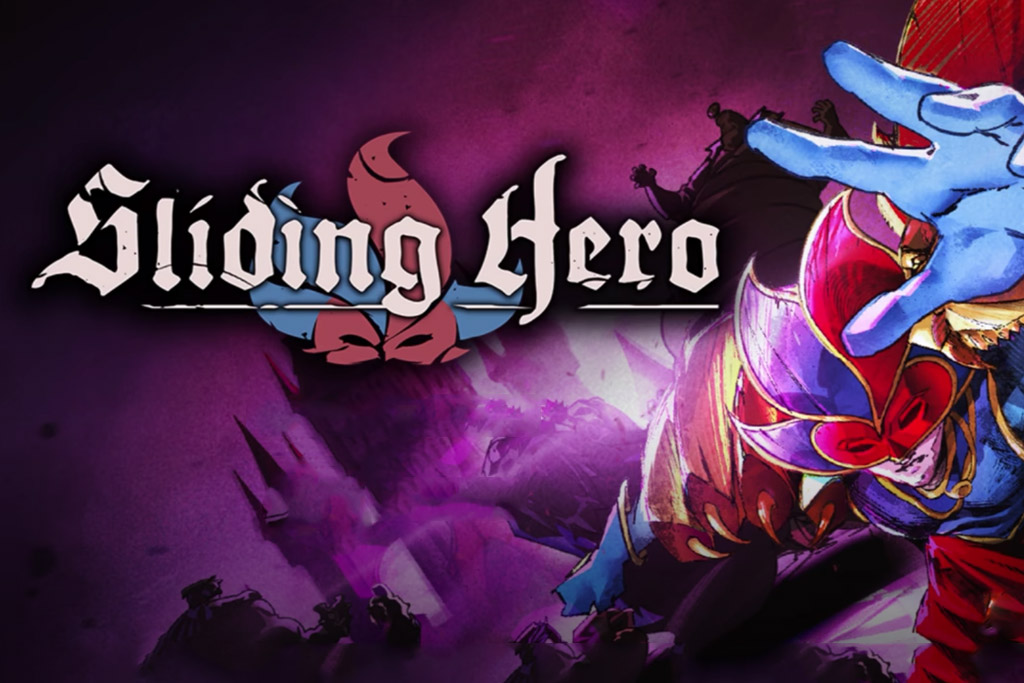
This targeted strategy helped Sliding Hero connect immediately with diverse global audiences. Prioritising store-level visibility across five languages while delivering full in-game localisation in the two highest-priority territories proved to be the decisive multiplier for the game’s international adoption.
Wishlist growth in these markets accelerated meaningfully, demonstrating a core truth of indie game localisation services: it is not about doing everything; it is about doing the right things brilliantly.
Your Global Launch, Perfected
The global video game market does not wait, and it does not forgive half-measures. Players recognise immediately when a localisation has been done without care, and they talk about it. By contrast, when a game feels native, it earns loyalty, reviews, and revenue that transcend borders.
At 1Stop Translations, we have done the hard work at every scale: from the strategic, market-targeted approach we built for Sliding Hero to the transcreation-led creative partnership that brought Big Hops to life in four new languages. We carry the expertise, methodology and genuine passion for games that separate a specialist video game localisation agency from a generalist translation provider.
If you are preparing a global launch, we are ready to talk. Level Up your next project: contact us today for a bespoke consultation, and let’s build something the world will play.
Need a quote? Click here