


When brilliant game design meets global audiences. There is a particular kind of pressure that surrounds a carefully crafted indie game the moment it steps beyond its home market.
6-minutes read
When a studio pours genuine craft into a game’s personality, its humour, its rhythm, its sense of self, the risk of losing that in translation is not theoretical. It is very real.
The job of a localisation partner is not to rewrite a game, but to act as a clear mirror: reflecting the original brilliance into other languages with the same fidelity and the same warmth. This is the story of how we approached that responsibility for Big Hops, and what happened when we got it right.
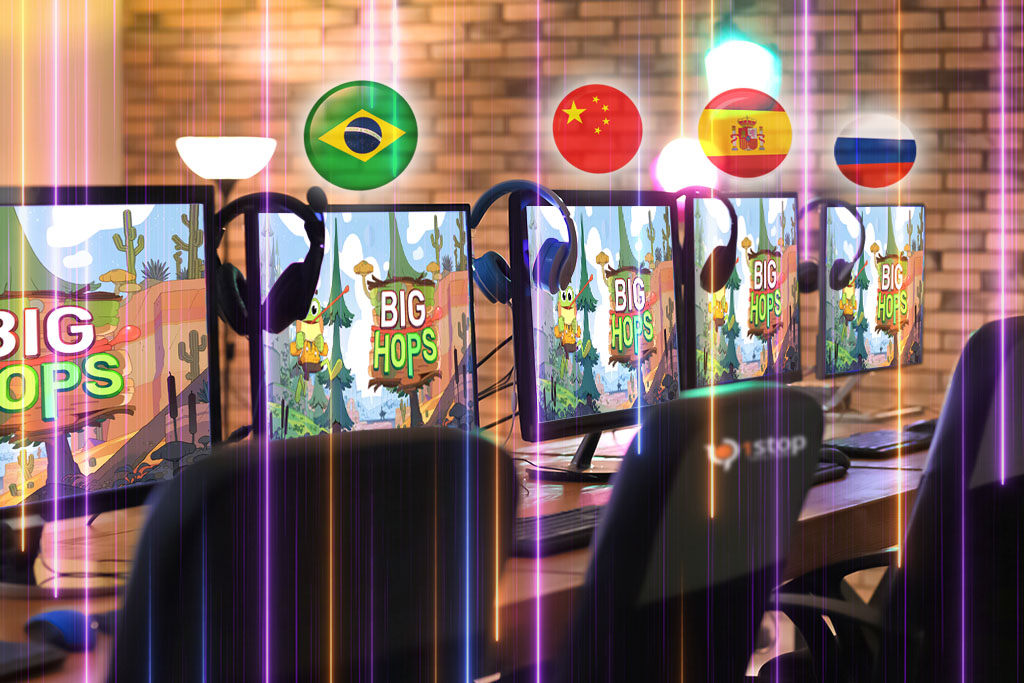
The Client and the Masterpiece: Luckshot Games’ Big Hops
Luckshot Games is an independent studio with a clear artistic voice. Big Hops, released in January 2025 on Steam, PlayStation 5, and Nintendo Switch, is a physics-based 3D platformer centred on Hop, a friendly frog kidnapped from his forest home by a mischievous spirit named Diss. To find his way back to his family, Hop must traverse three distinct worlds: the Red Desert, the Open Ocean, and the Shattered Mountain, rebuilding a broken Airship along the way.
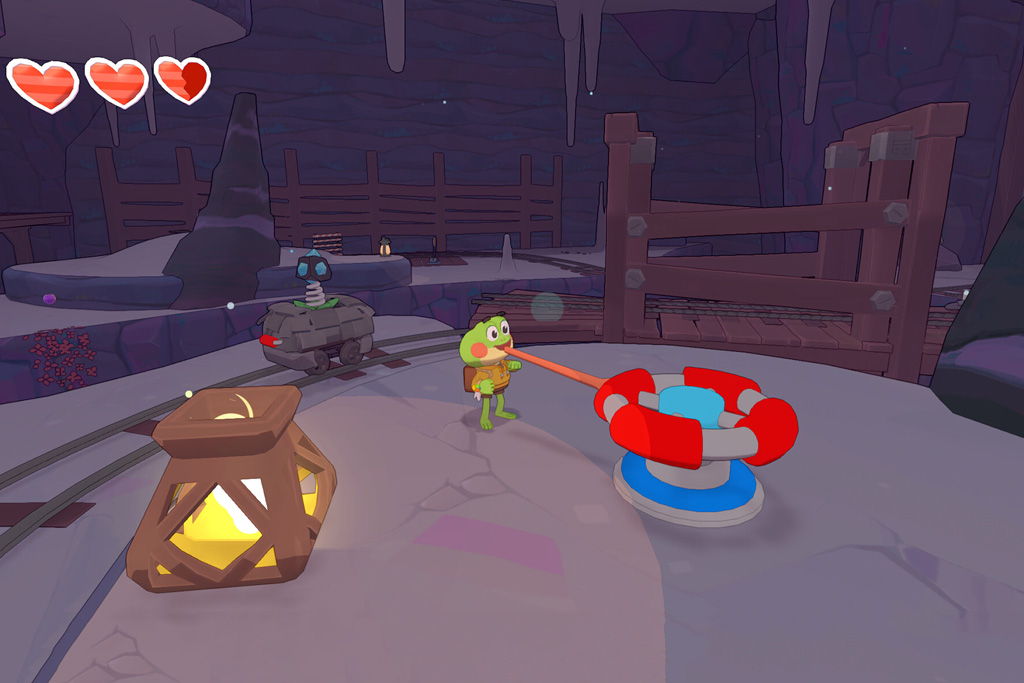
What distinguishes Big Hops from the wider field of platformers is not simply its premise, but the depth of its movement system. Hop’s tongue mechanic opens up an unusually expressive range of interactions, including grabbing, swinging and solving environmental puzzles, all of which feed into a fluid, momentum-driven gameplay loop that critics singled out as one of the game’s standout qualities.
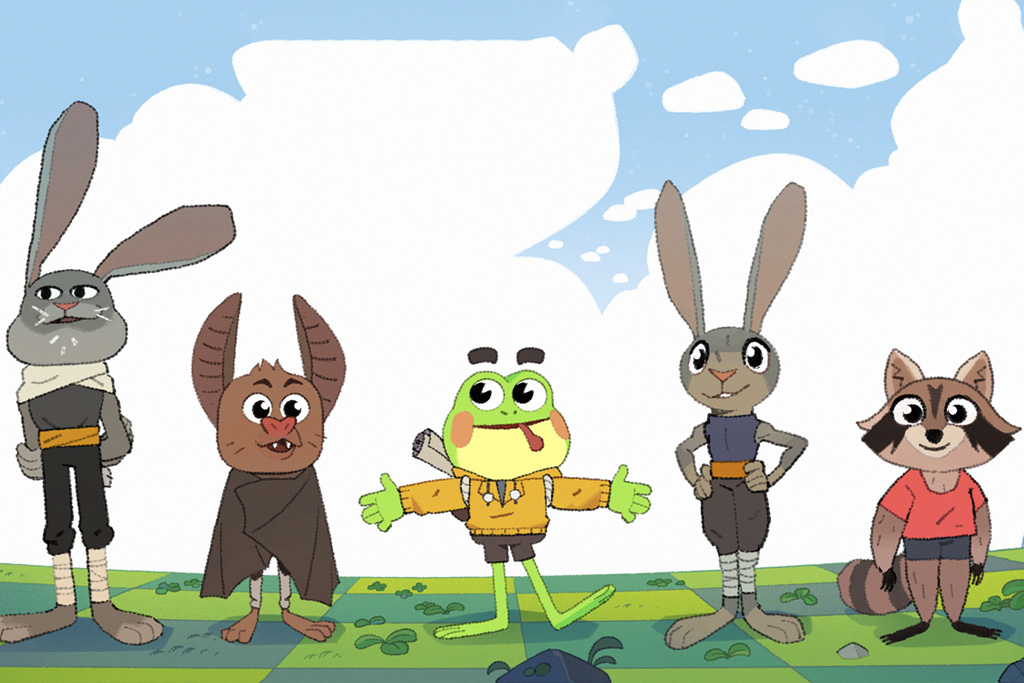
The characters Hop encounters on his journey, including rabbits, raccoons, gulls, otters and bats, are designed with genuine charm, featuring original artwork by Steven Sugar, and carry dialogue that is witty, warm, and distinctly human in its comedic timing.
When Big Hops arrived at our door, its quality was never in question. The challenge, as it always is with personality-driven titles, was one of preservation. How do you carry that native charm across four linguistically and culturally distinct markets without diluting what makes the game special?
The Challenge: Reworking Humour Without Altering the Soul
The four target languages for this project were Spanish, Brazilian Portuguese, Chinese, and Russian, each representing not just a linguistic shift, but also a distinct cultural context with its own comedic sensibilities, idiomatic rhythms, and expectations of character voice.
Big Hops leans heavily on personality. Hop’s dialogue is not decorative; it carries the emotional core of the game: the banter, the timing, the gentle absurdity of a frog navigating an extraordinary world with cheerful determination.
A literal translation of that material would have been a quiet disaster. Not wrong, exactly, but flat. The kind of flatness that accumulates over hours of play and leaves an international reviewer with a nagging sense that something is slightly off, even if they cannot articulate why. That disconnect is enough to shift a score, and with it, a game’s commercial trajectory in a given market.
The project required something more disciplined: a culturally respectful adaptation that honoured the developer’s original intent whilst making every joke land, every character feel real, and every line of UI text sit naturally in its context. That is a very different brief from standard translation, and it demands a very different kind of team.
The Partnership: Seamless Culturalisation as an Extension of the Studio
When studios work with 1Stop Translations, the relationship is not transactional. We do not receive a script, disappear for a few weeks, and return with a localised file. What we bring to a project like Big Hops is something closer to creative collaboration: the kind of working dynamic that only produces excellent results when there is genuine respect for the source material on both sides.
In practice, that meant several things operating simultaneously.
Our specialist linguists, with deep roots in their respective languages and cultural contexts and a genuine passion for gaming, approached the script not as text to be translated, but as a voice to be authentically understood.
Idioms were not substituted mechanically; they were rebuilt from the ground up so that they carried the same comedic energy in Spanish, Brazilian Portuguese, Chinese, and Russian as they did in the original English.
Puns that relied on specific phonetic or cultural associations in one language were reconstructed with locally resonant equivalents that preserved the rhythm and the payoff. Slang was handled with particular care: regional authenticity without anachronism; naturalness without alienation.
Game culturalisation of this kind is slow, considered work. It involves asking repeatedly: does this sound like something Hop would say? Is this the version of this moment that an international player, one who has never played the English original, would find equally delightful?
Throughout, the guiding principle remained the same: we were not here to impose our interpretation on Big Hops. We were here to serve Luckshot Games’ vision and to ensure that players in Madrid, São Paulo, Shanghai, and Moscow experienced the game with the same sense of joy and clarity as players in London or New York.
The Result: A Shared Triumph and a 78 Metacritic Scorer
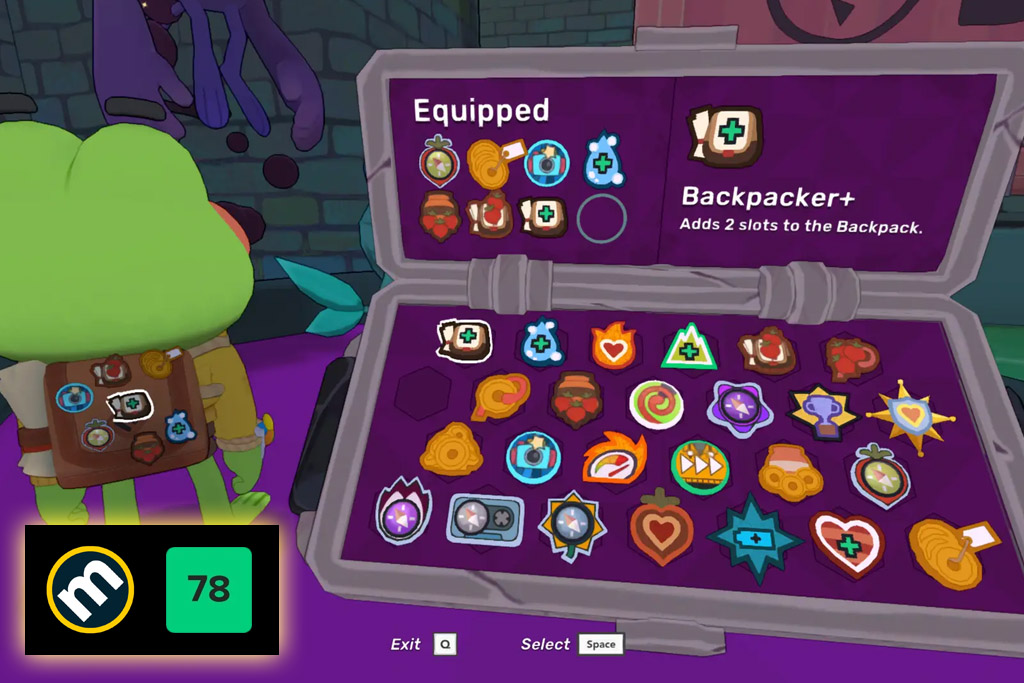
Big Hops achieved a Metacritic score of 78 out of 100, a critically acclaimed result that reflects, above all, the quality of what Luckshot Games built. That score belongs to the studio. To the design decisions, the movement system, the character work, the vision.
We want to be clear about that, because misattributing credit is not something we have any interest in doing.
What we can say is this: that score was secured globally. The international release did not suffer the kind of localisation-driven review deflation that quietly damages so many indie titles in non-English markets, where critics pick up on tonal inconsistencies, stilted dialogue, or UI friction and reflect that in their assessments, often without explicitly attributing it to translation quality.
By ensuring that reviewers in Spanish-, Brazilian Portuguese-, Chinese- and Russian-speaking markets experienced Big Hops with the same comedic clarity, the same character warmth, and the same mechanical confidence as English-speaking critics, the meticulous game culturalisation we provided helped protect the game’s global review average and, with it, its commercial potential across those markets.
That is what a genuinely attentive localisation partner contributes to global gaming growth. Not visibility. Not noise. A clean signal, the developer’s original signal, reaching every market intact.
Let Your Game’s Quality Speak Every Language
Our role is to ensure the world experiences it exactly as you intended: without compromise, without dilution, and without the kind of cultural friction that quietly undermines a game’s international reception.
Big Hops travelled well. Your game can too.
If you’re planning an international release and you need a video game localisation partner who treats your game’s voice as seriously as you do, let’s talk. Tell us about your project and we’ll tell you exactly how we’d approach it.
Discover how 1Stop Translations can support your international release.